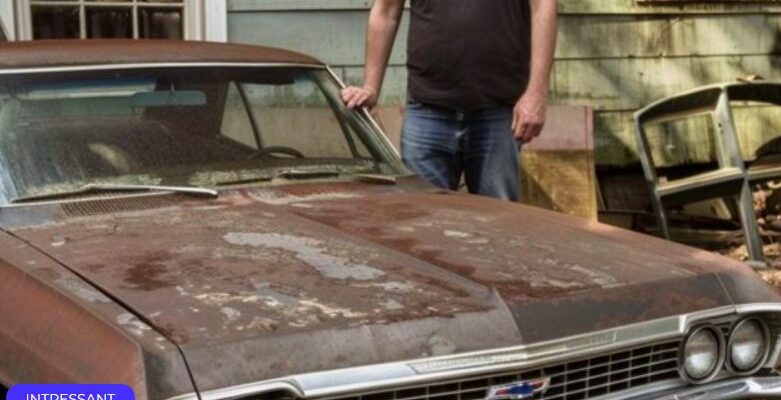
My father’s old ’67 Chevy Impala was more to me than just a rusty heap, but my neighbors saw it differently.
What started as a battle over an “eyesore” turned into something none of us expected and changed our quiet suburban street in ways we never could have imagined.

I had inherited an old, rundown ’67 Chevy Impala from my father. To most people, it was just a rusty car, but to me, it was a memory of my father and a project I wanted to restore.
The car was in my yard because my garage was full of tools and parts.
I knew it looked bad, but I had been trying to save money and find time to work on it. My neighbors, however, saw it differently.
One sunny afternoon, I was outside inspecting the Impala when a memory hit me. My father, Gus, had shown me how to change the oil. His thick mustache twitched as he grinned.
“See, Nate? It’s not rocket science. Just patience and muscle,” he had said.
I ran my hand over the faded paint and was lost in thought when a sharp voice pulled me back to reality.
“Excuse me, Nate? Can we talk about… that?”

I turned around and saw Karen, my neighbor from next door, pointing at the Impala with a disgusted look.
“Hey, Karen. What’s up?” I asked, already knowing where this was going.
“This car. It’s an eyesore. It’s ruining the look of our street,” she said, folding her arms.
I sighed. “I know it looks rough right now, but I’m planning to restore it. It was my father’s car—”
“I don’t care who it belonged to,” Karen interrupted. “It needs to go. Or at least be hidden.”
Before I could respond, she turned on her heel and marched back to her house. I watched her go, feeling a knot forming in my stomach.
Later that evening, I told my girlfriend Heather about it over dinner.
“Can you believe it? It’s like she doesn’t understand what this car means to me,” I said, poking at my salad.
Heather reached across the table and squeezed my hand. “I get it, honey. But maybe you could try to work on it a bit faster? Just to show that you’re making progress?”
I nodded, but deep down, I knew it wasn’t that simple. Parts were expensive, and time was tight.
A week later, I came home to find a notice from the city under the wiper of my “eyesore” vehicle. My stomach tightened as I read it.
“Remove the vehicle or hide it behind a fence,” was the gist of the message.
I crumpled the paper in my fist as anger welled up inside me. This was ridiculous. I needed advice.

I called my friend Vince, another car enthusiast. “Hey man, got a minute? I need your advice on something.”
“Sure, what’s up?” Vince’s voice crackled through the phone.
I explained the situation, and my frustration grew with each word.
Vince was silent for a moment before he spoke. “Build the fence,” he said slowly, “but with a twist.”
“What do you mean?” I asked, curious.
“You’ll see. I’m coming over this weekend. We’ll have some fun.”
That weekend, Vince showed up with a truck full of wood and paint. We spent the next two days building a tall fence around my front yard.
As we worked, Vince explained his plan. “We’re going to paint a mural of the Impala on this fence. Every dent, every rust spot. If they want to hide the car, we’ll make sure they remember it.”
I grinned, loving the idea. “Let’s do it.”
We spent Sunday painting. Neither of us was an artist, but we managed to create a pretty good replica of the Impala on the fence. We even exaggerated some of the imperfections, just for good measure.
As we stepped back to admire our work, I felt a sense of satisfaction. Let’s see what the neighbors think, I thought.
I didn’t have to wait long to find out. The next afternoon, there was a knock at my door. I opened it to find Karen, flanked by a group of neighbors. Their faces were a strange mix of anger and desperation.
“Nate,” Karen began, her voice tense, “we need to talk about the fence.”
I leaned against the doorframe and tried to hide my amusement. “What about it? I did what you asked. The car is now hidden.”
One of the other neighbors, an older man named Frank, spoke up. “Look, kid, we know we asked you to hide the car, but… well, this mural… it’s just too much.”
I raised an eyebrow. “Too much? What do you mean by that?”
Karen sighed heavily. “It’s worse than the car itself. It’s like you turned your whole yard into… into…”
“A work of art?” I suggested, unable to keep the sarcasm out of my voice.
“An eyesore,” Karen finished firmly. “We’d rather see the real car than this… this monstrosity.”
I crossed my arms and enjoyed their discomfort perhaps a little too much. “So, let me get this straight. You complained about my car, made me spend money on a fence, and now you want me to take it down?”
They all nodded, but looked guilty.
I thought for a moment and then said, “Alright, I’ll take the fence down, on one condition. You all agree to stop complaining about the car while I work on restoring it. Deal?”
They exchanged glances and then reluctantly agreed. As they left, I could hear them muttering quietly among themselves.
The next day, I began taking down the fence. As I worked, I noticed that some of my neighbors were watching with interest. One of them, a man named Tom, even came over to chat.
“You know, Nate, I never really looked at that car,” he said, pointing at the Impala. “But now that I see it up close, it has potential. What year is it?”
I smiled, always happy to talk about the car. “It’s a ’67. My father bought it when I was a kid.”
Tom nodded appreciatively. “Nice. You know, my brother is into classic cars. I could call him if you need help with the restoration.”
I was surprised by the offer. “That would be great, actually. Thanks, Tom.”
In the following weeks, word spread about my project. To my surprise, several car enthusiasts from the neighborhood started stopping by to check out the Impala and offer advice or help.
One Saturday morning, as I was working on the engine, I heard a familiar voice behind me.
“So, this is the famous car, huh?”
I turned around and saw Karen standing there, looking uncomfortable but curious.
“Yeah, that’s it,” I said, wiping my hands on a rag.
Karen stepped closer and looked at the engine. “I have to admit, I don’t know much about cars. What are you working on?”
I explained the basics of what I was doing, surprised by her interest. As we talked, more neighbors gathered around, listening and asking questions.
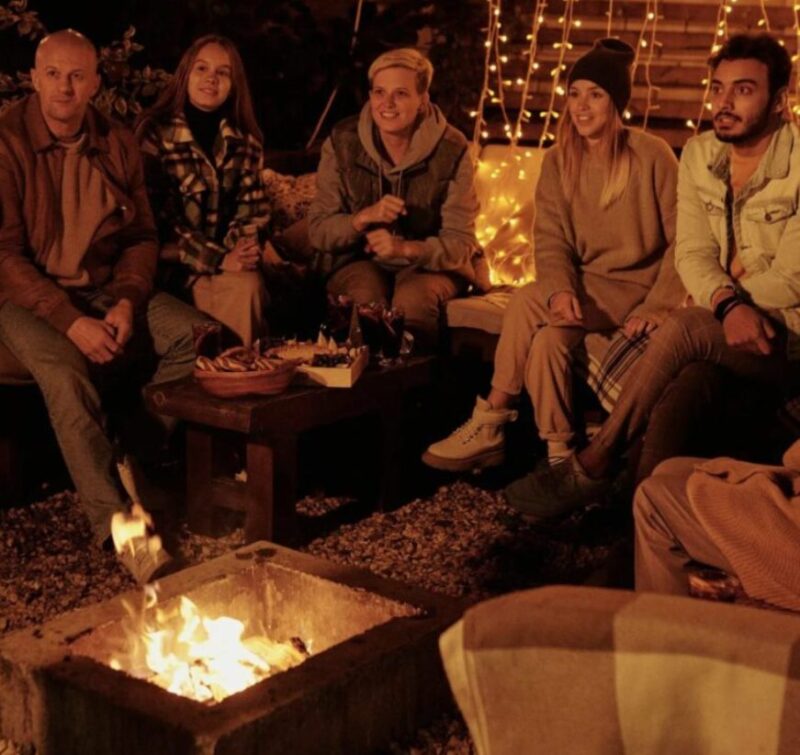
Before I knew it, my yard had turned into an impromptu block party. Someone brought out a cooler of drinks, and people started sharing stories about their first cars or memories of classic models they had owned.
As the sun set, I found myself surrounded by my neighbors, all laughing and chatting. Even Karen seemed to be having a good time.
I looked at the Impala, still rusty and rundown, but somehow looking better in the warm evening light than ever before. I thought of my father and how much he would have loved this scene.
“You know,” I said to the group, “my dad always said a car wasn’t just a machine. It was a story on wheels. I think he would be pretty happy to see how many stories this old girl has brought out today.”
There were murmurs of agreement and raised glasses. As I looked into the faces of my neighbors, now friends, I realized something. This car, which had caused so much trouble, had brought us all together.
The restoration was far from over, but I had a feeling that the journey from here on would be much more enjoyable. And who knows? Maybe when the Impala was ready for the road, we’d have an entire neighborhood of classic car enthusiasts ready for a cruise.
I raised my drink. “To good neighbors and great cars,” I said.
Everyone cheered, and as the laughter and conversation flowed around me, I couldn’t help but think that sometimes the best restorations aren’t just about cars. They’re about community.